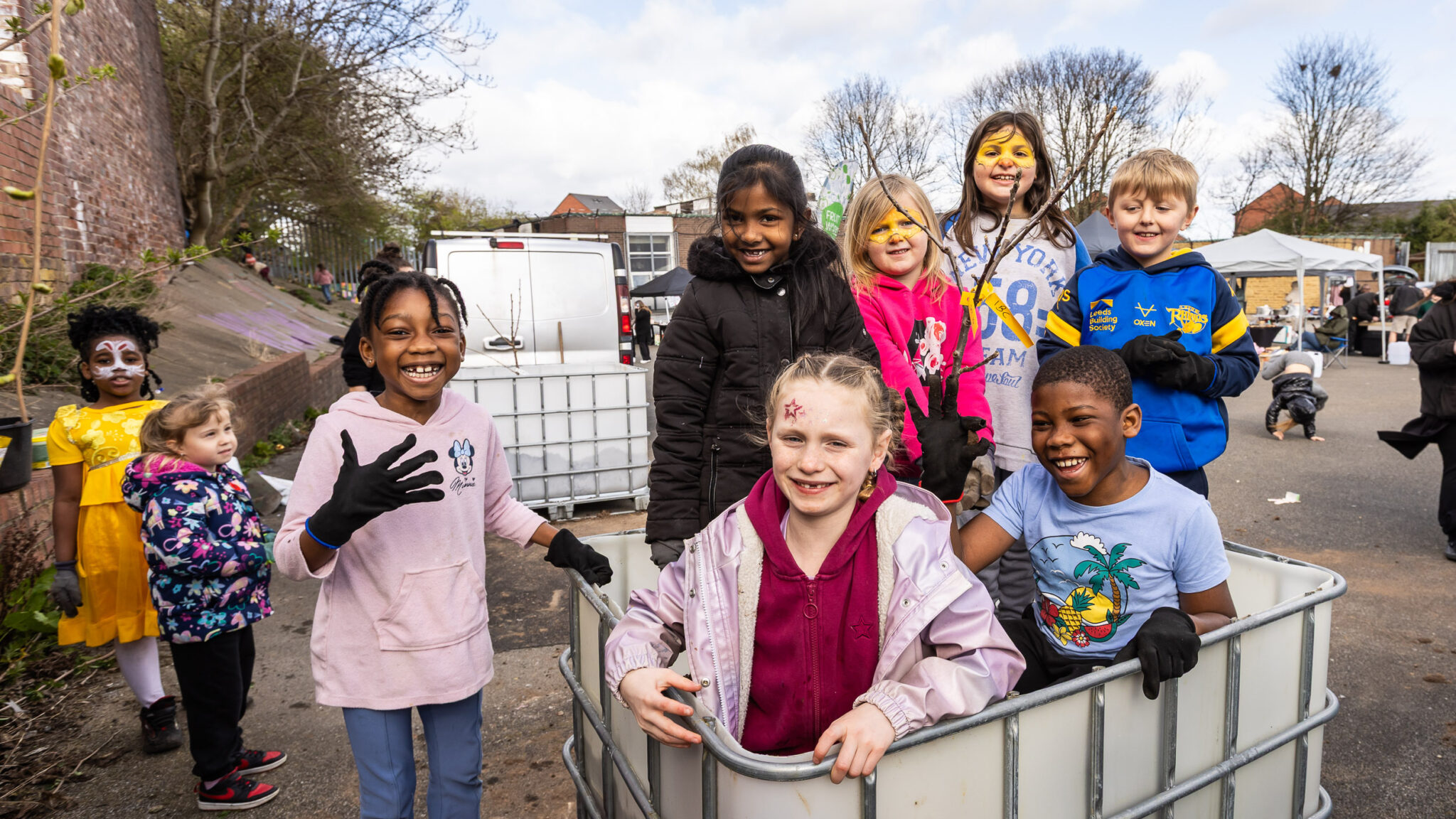
A group of cheerful children in colorful outfits and face paint smile at the camera outdoors, conveying joy and camaraderie on a clear day.
Families

From Derelict Land to Play Patch: Rowland Road Play Patch turns 1!

by Rowland Road Play Patch volunteers, supporters, Caitlin Mchugh and Helina Bassey. Journal 19 May 2026

A Community Reclaimed Space Through Art and Play

Over the past year, something special has been happening at the back of the Rowland Road Working Men’s Club in Beeston Hill. What was once an overgrown, underused piece of land is now a community-built play space, shaped by local families, volunteers, artists and partners. Today, it is used every Saturday (11am–2pm) by children and their carers from across South Leeds.

Although the Rowland Road Play Patch officially opened in March 2025, its story began much earlier. Local parents Jade and James recognised the lack of safe, accessible spaces for children to play freely, something they felt had been lost over time and increasingly absent: time spent outdoors, exploring, building confidence and opportunities to be part of a community.

“When we were younger, we just went outside and played,” Jade reflects. “We wanted to bring that back.”

With support from Councillor Ed Carlisle, they identified a derelict site behind the club, overgrown and filled with rubbish, but full of so much potential.
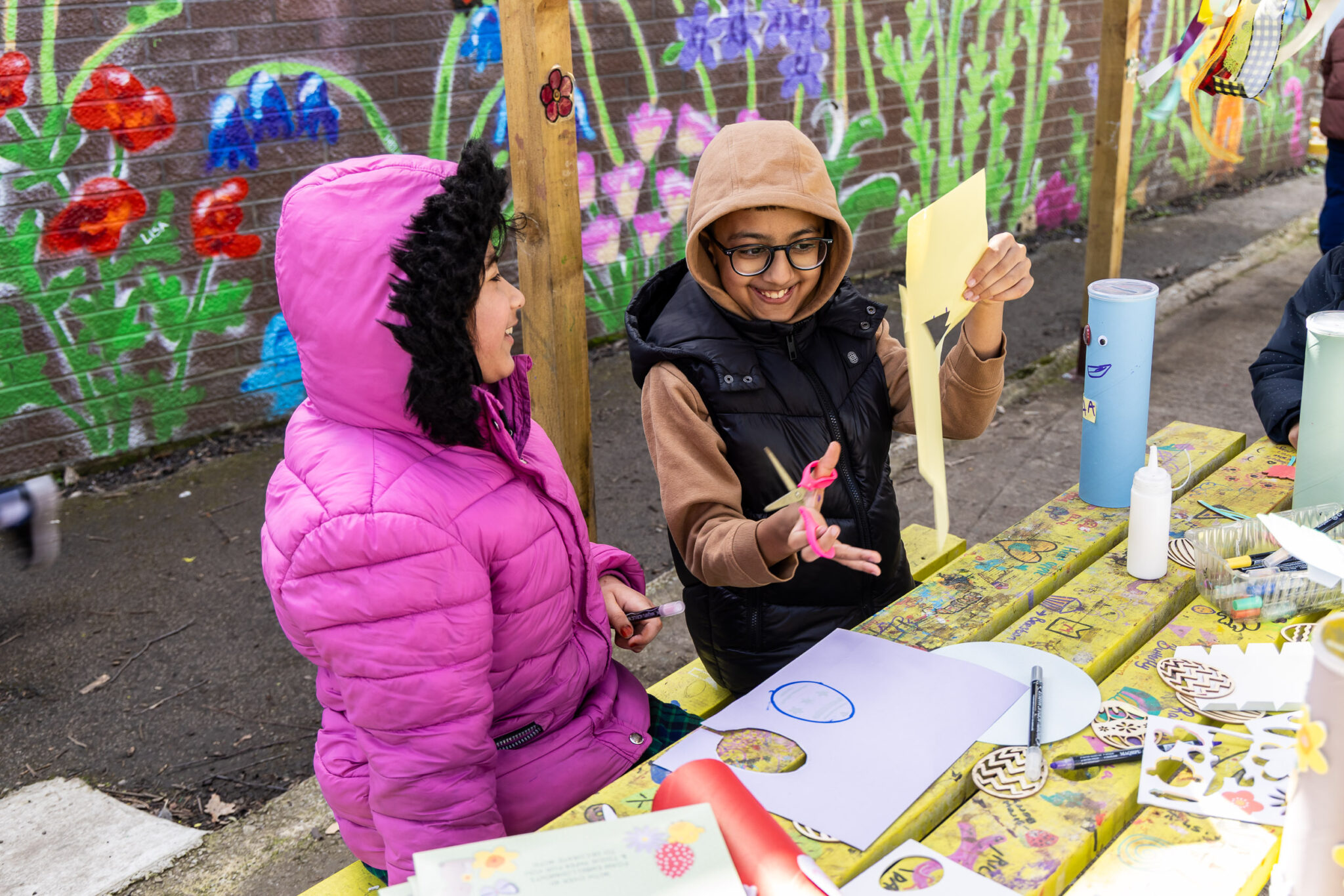
Two children in winter clothing laugh and craft at a colorful table outdoors, with a vibrant floral mural behind them. The scene is joyful and creative.

Building Momentum Together

The Play Patch was never intended to be a fixed design or to be a top-down development. Instead, it has grown through collective effort, shaped by the people who use it.

From 2024, volunteers working with Yorkshire Contemporary began the physical work of clearing the site. The work was slow and demanding, cutting through dense vegetation, removing fly-tipping and gradually opening up the land. Over time, a strong community formed, with 50 volunteers contributing 1,490 hours.

“It’s very hard work,” says Jo, volunteer and club secretary. “It was difficult to gain momentum at first.”

That momentum came through persistence, with dozens of local residents, families, students and partners returning week after week. Together, they built the foundations of the Play Patch: fencing, den-building areas, a fire pit and storage.

Artists were invited to collaborate with volunteers and families, supporting the development of the space through participatory making, experimentation, and hands-on building activities.
These included chalk painting, clay animal creation, loose parts and water play, nature printing, bug hunts, and pot painting, led by artists Isabel Wagstaff, Erykah Bourke, Chris Harman, and Thahmina Begum.

Artist Matilya Njau also worked with families to create a sensory garden, shaped by input from local schools and Leeds Local Offer’s SEND Youth Council.

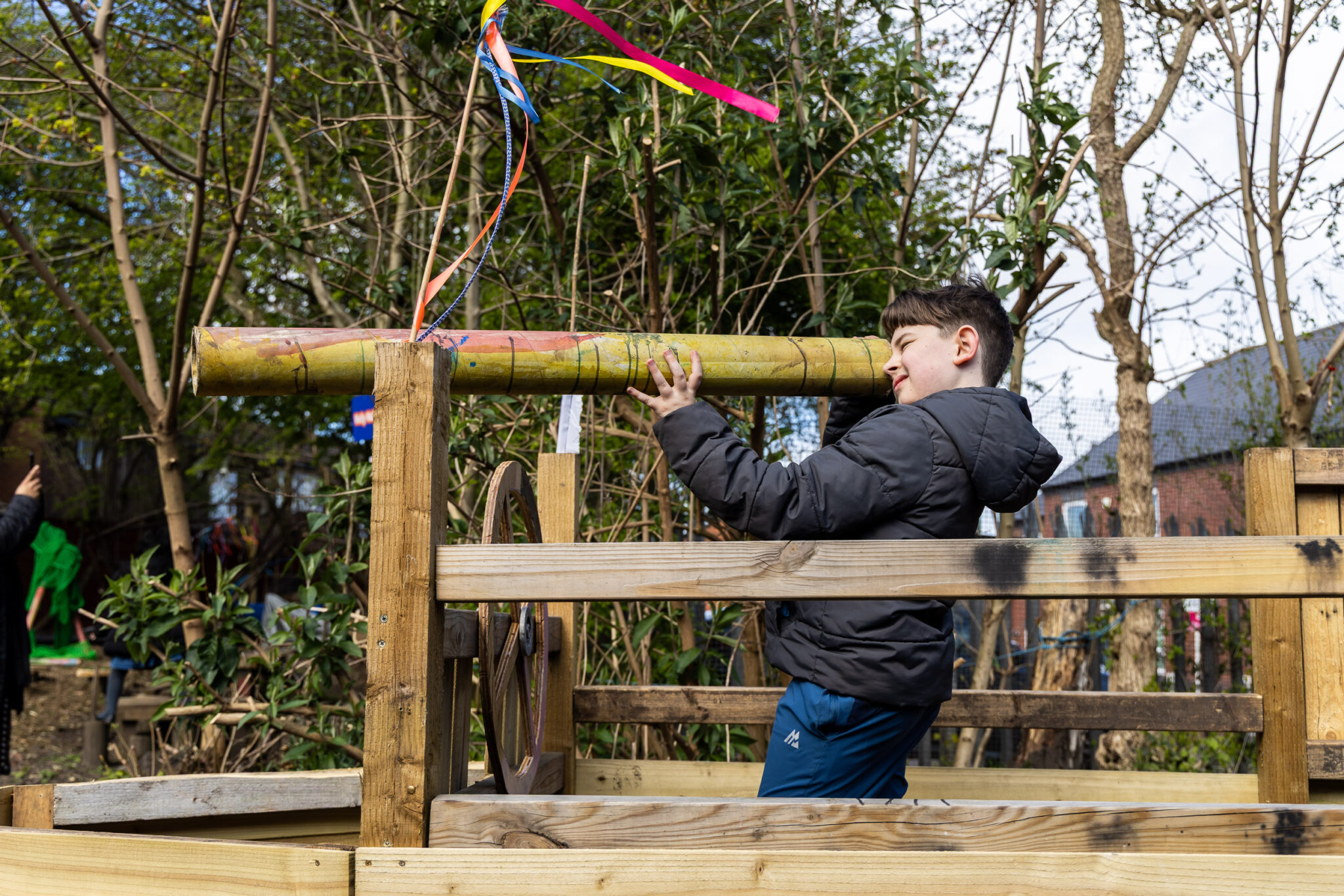
A boy in a black jacket looks through a large bamboo telescope adorned with colorful ribbons, set in a wooden play structure in a leafy garden.

When Play Really Began

“My favourite part is playing in the pirate ship.” – Child participant.

By March 2025, children began using the space regularly and everything massively shifted!

“It changed when the kids arrived,” says Frankie, who first joined as a student volunteer. “They became the reason for everything, the decisions, the space itself. It showed us why it mattered, uniting the volunteer group.”

The play patch has been a joyful space for children to explore, imagine and connect with others. Another child shared that they enjoyed “playing with Alice” her friend, highlighting the friendships the sessions help support and build.

Today, the Play Patch is a free, open-access space where children build, climb, dig and invent their own games. It is flexible and evolving, shaped by its users rather than fixed structures.

“It’s not just for children, it’s for parents as well,” Jade explains. “You can come here, breathe, talk to other adults. The pressure of having to entertain your kids disappears, they can just play.”

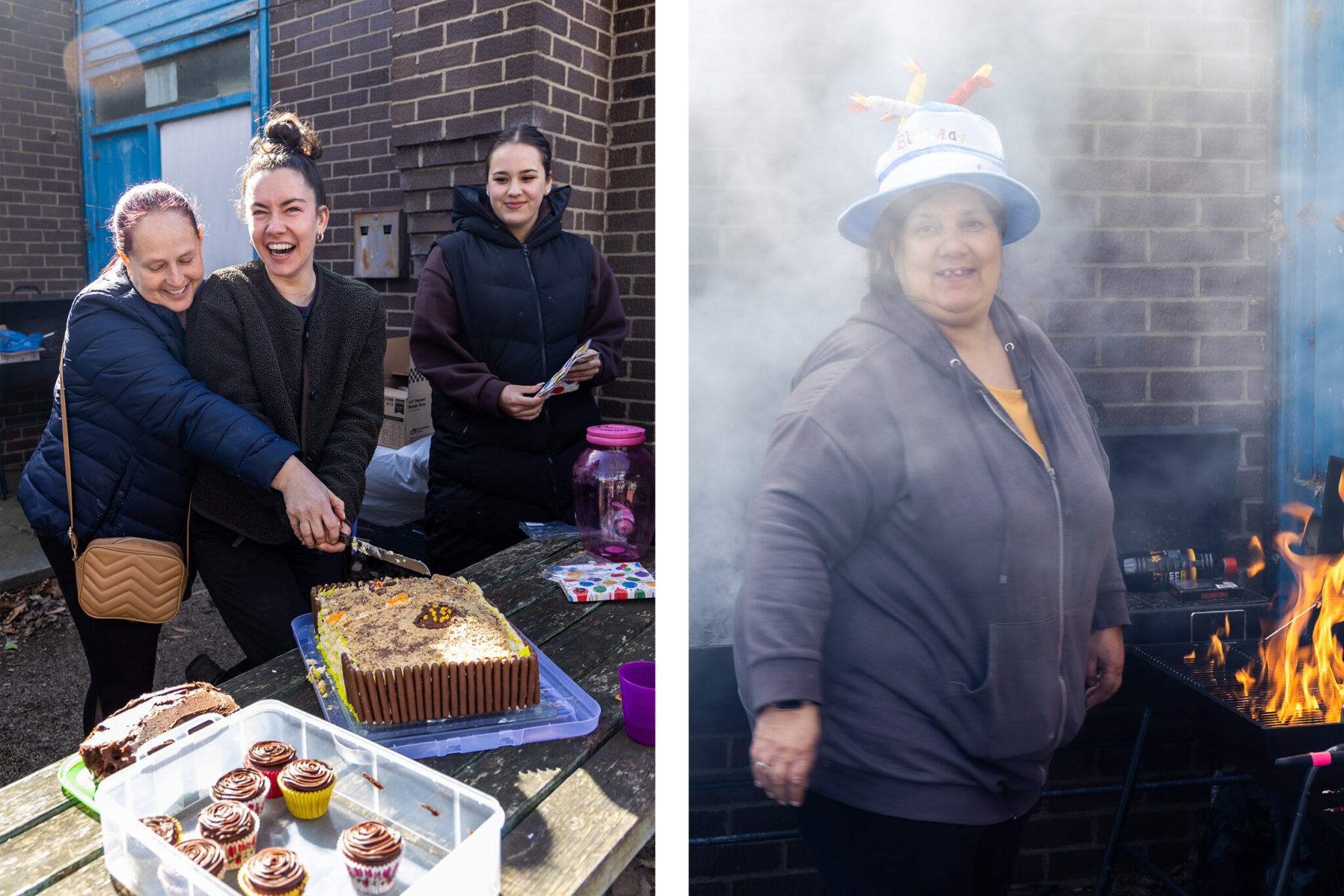
Two images: Left, three women joyfully gather around a large cake outdoors. Right, a woman smiling, wearing a novelty hat, stands near a smoky barbecue.

Why Spaces Like This Matter

The Play Patch prioritises self-directed, messy play, supporting independence, problem-solving and social skills.

“If they fall out, there’s space to walk away,” Jade explains “They can then come back together, learning how to work things out in real life.”

For Yorkshire Contemporary, the project is part of our INSIDE OUT programme, focused on supporting creative play for children and families in Beeston and Beeston Hill. It forms part of the organisation’s artistic strategy of supporting continuous play, curiosity and creativity for people from all walks and stages of life.

“Play became the way of curating the space,” says Frankie.

Assistant Curator and Project Lead Caitlin McHugh adds:
“At its core, this is a curatorial project exploring how play, trust and care can mobilise a community. As curator, my role has been to hold the space for this to happen, working alongside families, volunteers and artists rather than setting fixed outcomes – the only one being we want to work together to create a space for children to play in their community. Through this, we’ve seen how collective participation can shape both the space and the relationships within it” 

“Public art and public art projects should be encouraged to exist. They should be a springboard for collective action” – Bruce Davies from South Leeds Life 

Decisions are made collectively, with children’s ideas often reshaping adult expectations. What may seem unfinished is intentionally left open for imagination.

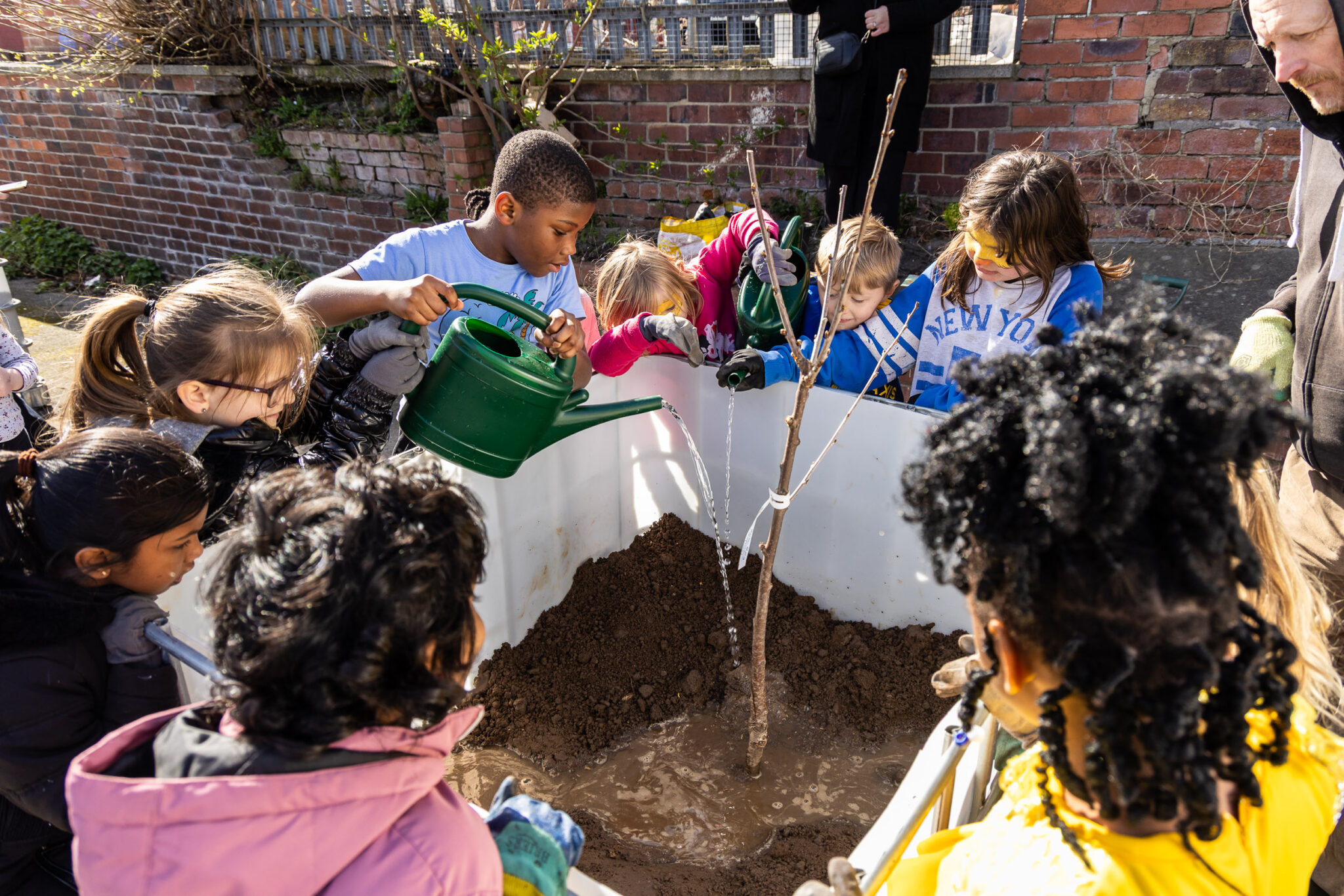
Children enthusiastically water a tree sapling planted in a large container filled with soil. The sunny setting conveys teamwork and joy.

Joy and a Lasting Impact for the Community

The Play Patch has had a wider impact beyond the space itself. Volunteers and families speak of stronger relationships, improved wellbeing and a renewed sense of pride in the area.

“It’s helped my mental health immensely,” Lisa, a local resident says. “I’d have just sat at home otherwise. Now I’m out, meeting people, being creative with my grandchildren”. 

“I joined the Play Patch anxious and without the best people skills, but by the end of the first session, I felt like I had made a difference to at least one person. Helping one person can’t change the world, but it could change the world for one person. That’s what volunteering feels like.” – Bailey, volunteer. 

Even perceptions of the club have shifted. “People take more pride now. It’s changed how the club and the area are seen. There are fewer signs of neglect around the site and more signs of care.” says Jo. 

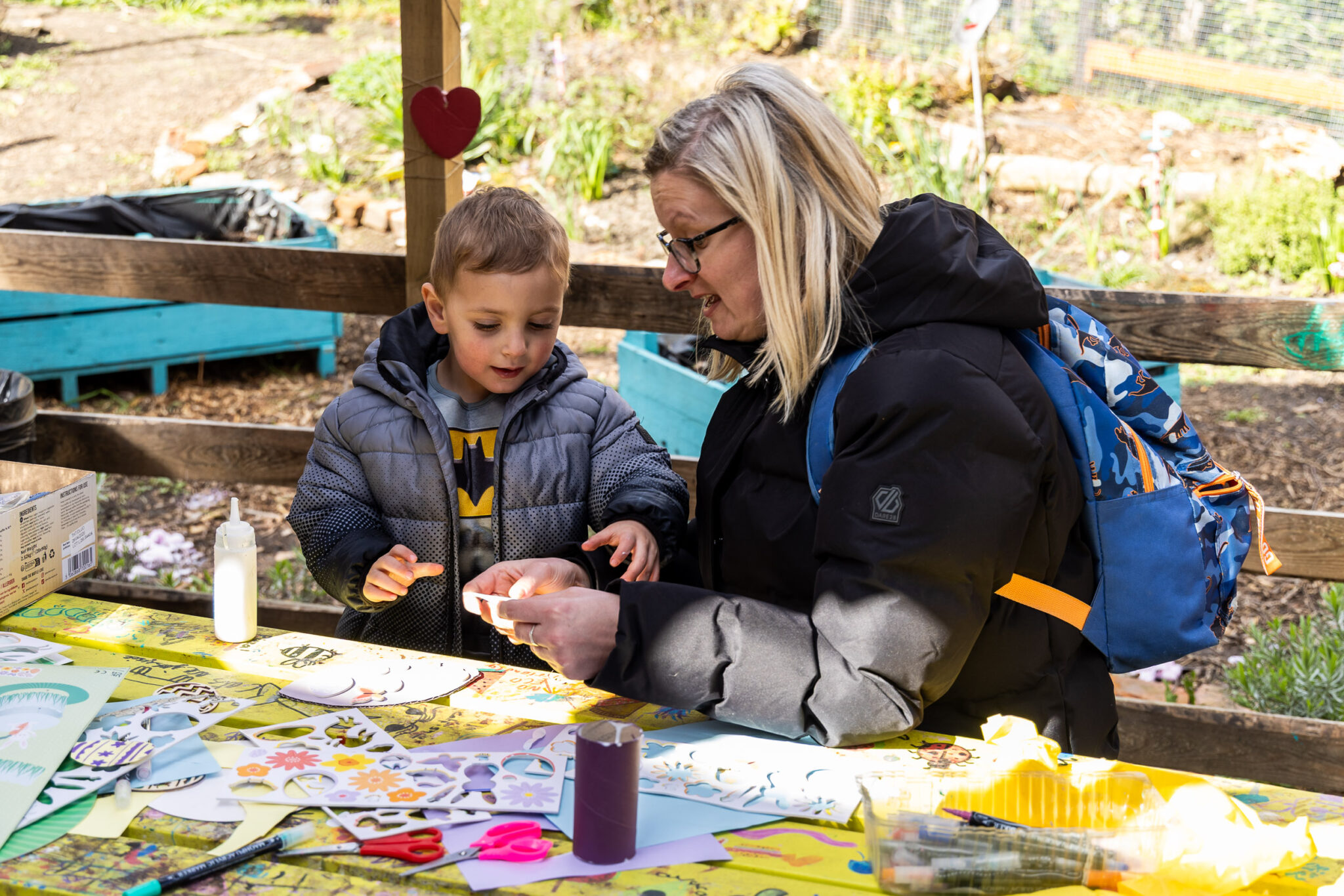
A mother and son smile while crafting at an outdoor table covered with colorful paper and art supplies. The setting is bright and cheerful.

Looking Ahead

The project continues to evolve, with plans to increase the site’s biodiversity, deepen partnerships and continue working with artists and the community.

At its heart, the aim remains the same: a space held by the community, for the community.

After one year, the Rowland Road Play Patch stands as a testament of what can happen when people come together to build something collectively. It is more than a play space. It is a shared investment in the present and future of the area, a place where play, care and connection are valued.

As one volunteer put it:
“It’s brought people together how it should always have been.”

The Rowland Road Play Patch has been recognised as an example of strong community practice by Stir to Action and Centre for Democratic Business, as part of their recently launched national platform, 21st Century Social Clubs, which aims to recognise, protect, and revitalise these vital community assets for generations to come. 

You can read the full article here – https://www.democraticbusiness.org/publications/articles/profile-rowland-road-play-patch

The Play Patch was also awarded the Gold Thumb Award from Child Friendly Leeds on 3 December 2025, recognising its outstanding contribution to children’s rights and play in the city.

To find out more about how to get involved in the play patch, please see our weekly Saturday play sessions information here or contact Caitlin McHugh – caitlin.mchugh@yorkshirecontemporary.org

Image credits: Rowland Road Play Patch, 2026, Yorkshire Contemporary. Photography by Jules Lister.

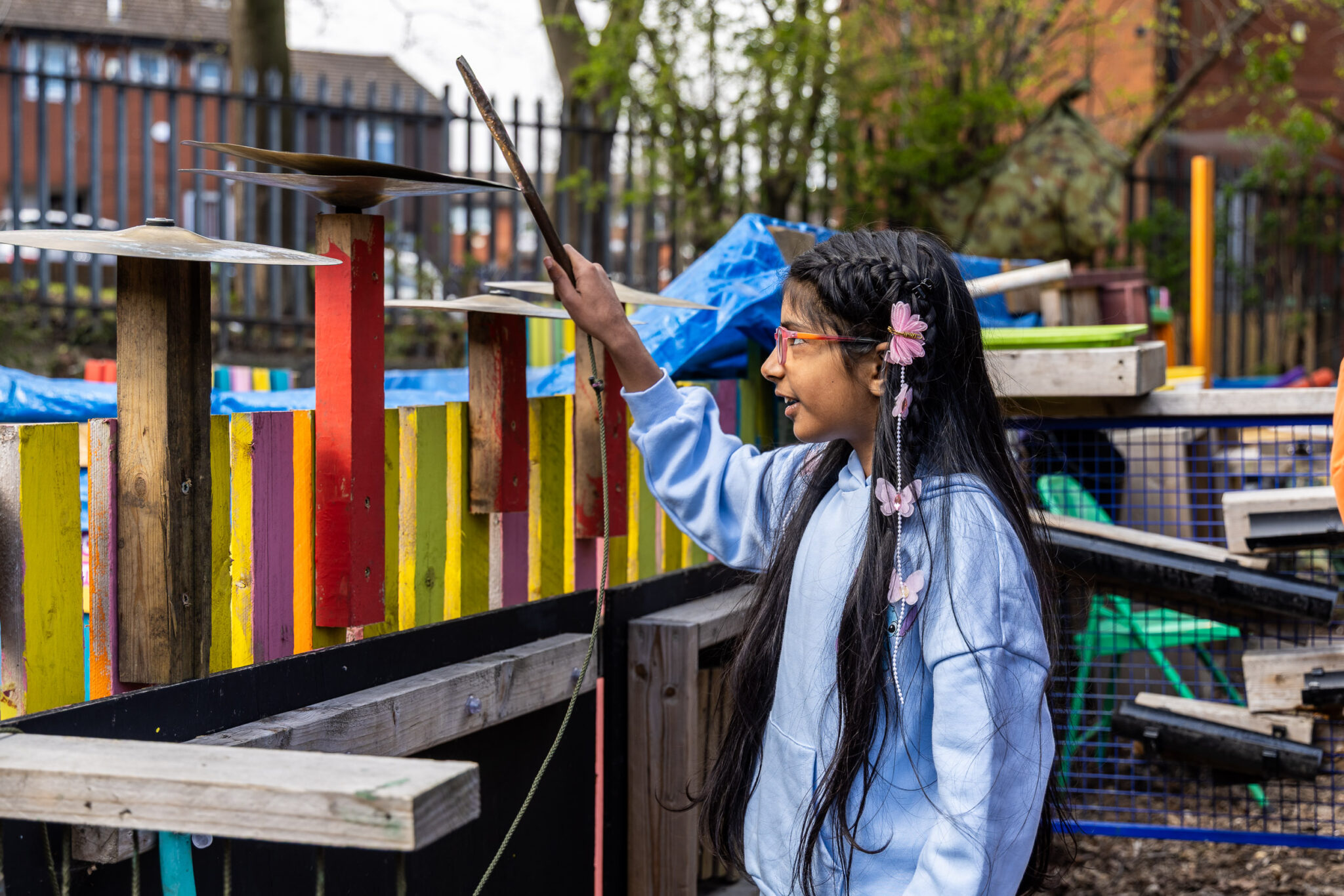
A girl with long hair and a flower clip plays outdoor musical chimes with a stick in a colorful, handmade setting, smiling joyfully.